Thursday, December 12, 2013

Advertisements That Tell Women Who To Be

Lately, the advertisements I've been seeing have been on my mind. So I'm taking a break from blogging about writing and switching to discussing paths to social change.

According to the advertisements I see for women, I’m supposed to be: 
                                                 in shape,

shaved,


                                                                   an alcoholic, 


                                                                 and engaged.


I’m supposed to clean my apartment with every product available and slather myself in makeup, hair, and anti-aging products. I'm supposed to be on a medicine cabinet's shelf worth of medications. I’m supposed to be buying a car but already have a fabulous auto insurance plan. I’m supposed to upgrade to all of the latest technology as soon as it comes out. I’m supposed to buy all kinds of Christmas gifts for my friends and family but only at bargain prices. I’m supposed to wear stylish clothes and fancy jewelry and make delicious dinners for my family with my plethora of kitchen appliances.

But I am none of the things advertisements tell women we have to be.

So clearly, the advertising companies are targeting the correct audience, because I obviously need to improve in all of these areas by buying their products. I am obviously not enough. Right?

Or does this mean that the marketing companies are wrong? Because despite the deluge of ads I’m exposed to every day, I have continued to resist the images they’re sending me. Instead, I have continued to be me.

Regardless, where are the ads that support reading, education, and independent thought? I want to see more ads like this one from Dove that tell women their bodies are innately beautiful and that they don’t need to be enhanced with products to feel better.


 I want ads to tell women that being single is okay and that they don’t need to primp and plump themselves to find a man if they want one. 

I want to see ads that promote financial stability and frugality. I want more ads that promote healthy foods, not for the sake of dieting but to live a long life. There should be more ads that show the value in family time away from screens. Where are the ads that promote honest volunteerism?

No wonder our culture is so materialistic, self-serving, and entitled. We learn how to act, what to wear, and who to be from the advertisements that saturate our media consumption. 

So where are the ads that are going to change that mentality for the next generation? If we don't create them, who will? 

Friday, November 22, 2013

Inspiration Drawn from Catching Fire

I saw Catching Fire last night, and I was absolutely blown away! The second movie in the Hunger Games series kept the momentum going from the last movie beautifully. For those who hadn't seen the first one in awhile, the second one reminded the viewer of the important main points so that we could jump right back into the story.

I felt the emotions of the characters throughout the movie. And I don't just mean I felt Katniss's PTSD-like symptoms or Peeta's undying love for Katniss, but I felt Johanna's concentrated anger and Finnick's panic when he heard the Jabber Jays mimic the sound of Annie being tortured. The actors and the filmmakers did a fantastic job of presenting relateable characters. 

One of the great storytelling ideas I saw in Catching Fire was the technology divide present between the capital and the other districts. When the audience sees scenes of the capital, the society appears to be a futuristic one. But when scenes of the other districts are shown, the world seems more antiquated. This combination of eras is an interesting concept.

Something else I noticed was that when the characters were in the Hunger Games arena, there was this overarching theme that literally any character could die at any second that really kept me on the edge of my seat. Even some tried and true storytelling rules of who can be killed and when can be broken in the arena.

Finally, I was amazed how much I could identify with Katniss's struggles to figure out her love triangle. It reminded me of the court cases shown on TV in that I always agree with whichever lawyer was just talking. My opinion is swayed that easily. Well in Catching Fire, I wanted Katniss to be with whichever man she was currently with in that scene. Prior to Katniss's story, I had never understood love triangles. I've only ever loved one person at a time. So the ideas of love triangles and cheaters are so foreign to me. But Suzanne Collins and the other people responsible for the Catching Fire movie did an excellent job of making Katniss's confusion understandable to the viewer. 

But the biggest thing I took away from the movie was the inspiration to keep writing. Catching Fire tells such a beautiful story of courage, revolt, love, and evil. Sometimes when I read stories or see movies that are that fantastic they make me want to stop being a writer because I think "I'll never be able to tell a story like that." But last night, Catching Fire helped remind me of the passion I have for writing. And when I write about real world issues that I am passionate about, that is when I'll write my own Catching Fire

So I've decided that when I'm trying to manage writer's block or a story I loved gets shot down by an editor, I'll watch one of the movies or read one of the books that made me want to be a writer in the first place! What could be a better reminder to tell great stories than a great story itself?

Friday, November 15, 2013

The Sleeping Canopy

I'm making pretty good progress with this story so far! That is largely due to a good writing friend of mine who's discipline is beginning to rub off on me! 

Here is the rest of the first chapter, which can be read here.

Once the ceremony had ended, Ebony had some duties to attend to and left Linden to show me around and introduce me to the rest of the trees.
Outside, a few trees milled about, waiting for their turn to meet the new member.
“Hazel, this is Wren,” Linden said. Wren was only slightly shorter than I, with light green eyes, dirty blonde hair, and gray bark. She looked to be about my age.
She grinned upon introduction.
“I’m so glad you’re here, Hazel!” The brown leaves caught in her wavy hair crinkled as she spoke animatedly, bobbing her head.
Her excitement was infectious, and Linden and I both grinned at each other. His amber eyes and warm brown hair seemed to glow against his black bark.
“Great to meet you Wren!” She moved to embrace me, which surprised me, but I didn’t back away from her either. A tree hugging another tree suddenly became a comical image in my head, and it made me want to giggle.
Linden motioned toward another nearby tree, a young male tree with a shock of leafy green hair. His black, almond-shaped eyes crinkled up at the corners when he smiled at me.
“I'm Rowan,” he said, “welcome.” As he leaned forward to shake my hand, a fine sprinkling of earth showered down from his hair. “Excuse me. Common result of working in construction.”
I held his eye contact and made no move to brush the earth off of my arm. “I’m sure,” I agreed, smiling. He ducked his head to acknowledge my comment and let go of my hand.
“Well, would you like to see where you’ll be living, Hazel?” Linden asked. I nodded.
I followed him for a few minutes through the forest to a secluded area hidden under a large green, woven canopy. He lifted an edge that was anchored to an inanimate tree and ushered me in. Under the canopy, twelve green woven hammocks hung, separated by curtains of lichen that waved in the breeze.

I took a deep breath.
“Wow.”
Linden motioned toward a nearby hammock, “This one’s yours. Go on, try it out.”
I was still getting used to my new body, so I clumsily leaned into the hammock and then struggled to lift my legs in to join me. But then I was gazing up at the bright stars through the canopy.
“This is beautiful.”
“It is. This is one of my favorite places.”
Just then, another tree bustled under the sleeping canopy. I sat up in my hammock to see her.
“Oh, hello,” she looked up from the trinket she carried. Everything about her had a purple shine. Her bark was light gray to the point of almost being purple; her jet black hair caught the moon light and shimmered purple; and her eyes were like violet gem stones.  “This is for you.” She handed me a creation made from weaving green vines and ferns around brown twigs that hung from another longer vine. “It’s a welcome gift. I’m Dahlia by the way.”
“Thank you, this is beautiful! And it’s so nice to meet you.”
She pointed to the hammock to the right of mine.
“I’m just next-door.” She smiled. “Don’t you think we should let her get some sleep?”
“Oh, of course. Excuse me,” Linden mumbled. “Please, make yourself comfortable, Hazel. There will be plenty of time tomorrow to continue your tour.”
“Thanks, Linden!”
I reached up to hang my gift from Dahlia on a tree branch, and I settled down into my hammock.

“Sleep tight, kiddo,” Dahlia said.

Friday, November 8, 2013

Actual Outlining!!

My goal for National Novel Writing Month, the month of November, is to make some serious progress with my Myristicae story. For this week, the plan was to create a story outline. I've never actually outlined a story in the detail before, to the point that I actually know how this story is going to end! So I'm excited to see how outlining will make my plot structure so much better. 
(This is how the inside of my brain looked before I started outlining! It's a scary place in there.)
If you don't want spoilers for the completed prose version of my story, I would advise skipping this blog entry. If you don't mind them, please let me know what you think of this outline! If you have questions or something doesn't make sense to you, please let me know. Also, if this world order seems confusing, please see my previous post about it, though please note that a few plot elements have changed. 
Myristicae Story Outline
Chapter 1
  1. Hazel’s transformation and induction into the Myristicae
  2. Brief explanation of the society, powers, appearance, abilities (to be continued)
  3. Hazel’s grief over the life she’s lost and her excitement about the life she’s gained

Chapter 2
  1. Hazel goes back to visit her friends and family and explains her absence to them
  2. Thyme, the tree teacher, begins to instruct Hazel in her responsibilities and privileges (continuation of powers and abilities explanation)
  3. We see her everyday life as a tree and the different building-like areas of the society
  4. Hazel becomes friends with Wren

Chapter 3
  1. Almond, Ash, Rowan, and Wren begin to let Hazel know of some of the down sides to being a tree, including hints about Ebony’s malicious side
  2. The five commiserate about the lives they could’ve had

Chapter 4
  1. Hazel begins to become attracted to Rowan, even though romantic relationships among the trees are strictly forbidden, but Rowan doesn’t seem to reciprocate
  2. Hazel’s human friends, Lila and Carolina, come to visit her in the forest
  3. Hazel continues her education with Thyme, with a guest appearance from Linden to learn about the tree’s governance

 Chapter 5
  1. Hazel has (what she thinks is) a dream about Ebony’s coercion and punishment of a resident who tried to leave Pinetop, but she can’t see the resident’s face in the dream
  2. She confides in Rowan, who tells her not to worry about it, Ebony is a good leader overall
  3. Hazel struggles with her studies, nearing the end

Chapter 6
  1. Hazel tries to put the dream to rest but the unknown face of the resident haunts her, and she proceeds to have dreams where the important people in her life take on that role and she watches them suffer
  2. Hazel fails a crucial test to keep a resident who wants to leave Pinetop from leaving and Thyme has to do it for her
  3. She sees the injustice in this society, and she has a fight with Wren about it
  4.  She regrets her transformation into the tree society

Chapter 7
  1. Hazel begins to realize that she can use her powers of persuasion however she chooses, not just to keep people inside the town
  2. She again confides in Rowan and this time he’s on her side. Hazel tells him about her dream, and he realizes that the spirits were sending Hazel a message about the first person who was ever punished for trying to leave. The spirits want change among the trees.
  3. Hazel and Rowan begin letting residents leave after wiping their memories of the trees with their powers of persuasion
  4. Hazel struggles with whether to let her friends and family leave because they would have to forget her


Chapter 8
  1. Ebony and Linden get wind of what Hazel and Rowan are doing and try to go after the people that have left
  2. While they are away, Hazel and Rowan decide it would be best for their friends and family to let them leave
  3. Once Ebony and Linden leave, they soon learn that their powers don’t work outside of Pinetop. They decide that once residents have left, including Hazel and Rowan’s friends and family, they cannot be allowed to return for the good of society.
  4. Ebony and Linden punish Hazel and Rowan for their treason by performing a ceremony that severs their relationship with the sacred cave, the place of their creation. Without a continued renewal of their spirits at the sacred cave, they will soon lose their abilities and die. This ceremony may only be performed by those who have the correct authority and relationship with the cave.

Chapter 9
  1. Wren sees this injustice and works to convince the other trees to no longer accept Ebony and Linden’s reign.
  2. With such a small populace of trees, it is easy to change their minds, except Thyme. If a kingdom’s subjects no longer consent to being ruled, what power do the rulers have?
  3. Once Ebony and Linden no longer have the allegiance of the trees, the power to perform the ceremony to reinstate Hazel and Rowan’s relationship to the sacred cave shifts to Wren and the rest of the trees as their governance decentralizes.
  4. Hazel and Rowan’s status as Myristicae is reinstated, and the group convenes to decide what to do with Ebony and Linden

Chapter 10
  1. After a long discussion, the trees decide to allowed Ebony and Linden to remain in the tree society, but to wipe their memories of their time of rule. The trees also decide not to appoint new rulers and rule by consensus instead to prevent future misuses of power.
  2. Within the restructuring, the trees decide to allow relationships among the trees, and Hazel and Rowan become romantically involved. The trees also decide that they could police the boundaries of the town differently. Residents may leave so long as they swear an oath not to talk about the Myristicae, and visitors may enter the town during a certain period where the trees would remain in hiding. This allows Hazel and Roman’s friends and families, and everyone else who left, to return back to Pinetop whenever they choose.
  3. Unfortunately for Hazel, there is no way to reverse her transformation. She will always be one of the Myristicae, which means that she can never leave Pinetop. But with a newly structured tree society and her budding romance with Rowan, this no longer bothers her as much as it did before.
  4. The new society continues on to fulfill its purpose of protecting the town from those who would mistreat the trees, and Hazel finds her true place in the group as a dream translator.  

THE END

Friday, November 1, 2013

Biography of Hazel Anderson

In regards to my last post, my Mom suggested I write a biography for my characters in order to get to know them better. So I thought I'd start with Hazel from the Myristicae story. 

Name: Hazel Anderson
Age: 18
Place of Birth: Pinetop, South Dakota
City of Residence: Pinetop, South Dakota
Family: Parents - Felix and Rachel Anderson, Sister - Harper Anderson (Age 9)
Appearance: 5' 4"; willowy body type, dark brown, medium-length, curly hair; heart-shaped face, and hazel eyes 
Hobbies: Taking pictures, reading about wonderful places around the world, journaling, and taking nature walks
Education: Graduated from Laura Ingalls Wilder High School 
Best traits: Loyal, working toward independence and education, honest, and understanding
Worst traits: Naive, short temper, holds a grudge


Hazel wanted to pursue her photography to become a destination wedding photographer so that she could travel the world. She wanted to see New York City, Paris, Prague, Venice, Singapore, and Dubai. 

She gets her love of photography from her Dad, Felix. He develops pictures professionally in a dark room. Hazel's Mom, Rachel, owns and works at a midwifery clinic in town. Most of the women in Pinetop have their babies at Rachel's clinic because she offers reasonable rates to a relatively poor town. 

But Hazel doesn't understand why neither of her parents have ever left Pinetop. They went to school together from kindergarten to 12th grade and got married soon after graduation. There is only one small community college in Pinetop, but the attendance is low because most of the jobs available there are in the service industry. 

Hazel didn't want to go to college. After graduation, she dreamed of finally being able to leave Pinetop. She knew it would be hard to leave her family behind, especially because she wanted to watch her little sister, Harper, grow up. Harper is in the 4th grade and is just learning to love reading now that she's getting so good at it.  

Growing up, Hazel was an only child for 9 years, and it was hard for her, at first, to lose that attention when Harper was born. But as everyone got used to the new family dynamic, Hazel grew to love having a baby sister to play games and be silly with. They're close even though they're in such different stages of their lives.

Hazel's best friends are Lila Everett and Carolina Jones. They're all grew up together and have been friends since they were young. Carolina doesn't have big plans for her life. She wants to marry her high school boyfriend and have kids as soon as possible. But Lila and Hazel give her a hard time for not wanting to get an education or travel first. Lila's not sure what she wants to do with her life, so she's enrolled at the community college to help her figure it out.   

Friday, October 25, 2013

Character Building

I read the first chapter of the novel I started back in 2011 in class this week. I got some really good feedback from my classmates. 

The story is about a teenage girl, Cecelia, living in the medieval times who discovers she has magical powers. Other people in her city have magical powers too, but she thinks that no one has her specific power, which is the ability to manipulate earth. 

In the beginning, she doesn't have control of the magic, and it spirals out of her when she gets upset. But she meets a man, Benedict, who not only has the same abilities but also knows how to control them. So he begins to teach her to channel her abilities through her willpower instead of her heightened emotions. 

The advice my classmates gave me was about making her thoughts and feelings about her abilities more prevalent because I'd only been hinting at them, and it could be confusing to the reader. My teacher also explained how action/reaction has to work in a story. In the story, Cecelia does something striking to a soldier, and the way I'd written he just left afterward. It makes sense that we would be outraged and embarrassed and would have an equally striking reaction. 

Revisiting this old story has made me think about my characters. I was wondering if anyone has any advice about building characters because that seems to be what I struggle with the most. How much do you have to know about a character before you start writing their story? I usually just end up writing endless versions of me. And when I write a male character instead, I wonder if I'm really doing him justice. 

Does anyone else struggle with this? I'm tired of writing me over and over. I'm bored with me. I want fresh characters. 

I'd love to hear feedback or advice from anyone about this! Thanks in advance. 

Friday, October 18, 2013

Revised Myristicae Story

*This is the revised part of the Myristicae story that I've been working on recently. I would like to continue this story and see how it turns out.*

The dark green potion tasted rich and earthy. It was hard to swallow as it ran down my throat. I choked, and the scraggly old tree-woman patted me on the back.
“Don’t fight it, dearie. You’ll only make it worse,” she said. Her body had become gnarled to the point that her tree features were obscured by her human ones. All of her leaves had fallen off, and her trunk leaned precariously to one side.
With the last shallow, I tried not to think about her life as I took her life force.
Then it was done. I would change now. She had given me her place in the tribe of the tree people.
Inside the sacred cave of the Myristicae, I would complete my transformation, just like our ancestors.
I felt my blood thinning in my veins, and my strength ebbed with it. I looked down at my arm as my pale skin began to darken and grow coarse. The hairs fused together to form rough patterns of mahogany brown bark. A leaf stem shot out of my neck, growing quickly. Ivy curled around my shoulders.
The old tree woman bent forward, clutching her chest in pain. She called out weakly, and Linden, the Magistratus, or second in command of the Myristicae, hurried in to help her stand. As he held her gently, I noticed the strong sinews in his dark arms. His amber yellow eyes looked at me knowingly.
I had not known her, and I felt out of place at the scene of her death. So I moved outside the cave.
In the dark forest air, my long brown hair waved gently in the breeze. I felt with my fingers that sections of my hair were pulled back from my face with gentle green tendrils, and a few autumn red and yellow leaves were caught playfully in my hair.
I was a tree.
I suddenly laughed, realizing that I had finally grown tall enough to be a model--just like I’d always wanted. I realized I must be at least eight feet tall now. Too bad models with bark for skin weren’t in high demand.
I tested out my newly elongated, coiled-root feet. My steps were slow and tedious now, but with some effort, I was able to move deeper into the forest.
 I imagined how penguins must feel with their long flippers, but at least I didn’t have to waddle.
I could no longer feel the October breeze because my thick bark protected me from the weather.
A shiver ran through me. The forest was beginning to feel like home. I knew the others were there, listening.
“Well, how do I look?” I asked.
Without a sound, a pair of warm brown eyes rustled to life in front of me.
“Wonderful, Hazel. Absolutely wonderful.” Ebony moved toward me. As the Premier of the tribe, her delicate tiara was almost hidden in the tangles of her black hair.
My eyes adjusted to the darkness until I could see the others standing in a ring around me. They all held their branches in the same way, the right raised with the left gently wrapped around the other. Ebony moved to do the same as Linden appeared. He shared a look with Ebony and then joined the circle, following suit.
“Welcome, Hazel. You are one of us now. You are part of the Myristicae,” Ebony said in a warm voice
And then in unison, the circle of trees said reverently, “Your roots run through our Earth.”
“And yours through mine,” I replied.
“We respect your bravery, Hazel. Your task was not an easy one,” Ebony said, her twig-like lips breaking into a smile.
I attempted to return her smile, but my lips felt taut and restrained, almost like I’d had Botox.
“And now, you’ll live like us,” Ebony explained. “The Myristicae are the guardians of the forest, and there must always be twelve of us. As you know, Saffron, a Myristicae elder, has passed on to the eternal resting place. You will now take her place, Hazel. There must be twelve to keep unwanted wanderers out of the town and reinforce the residents’ desire to stay here.”
I considered her statement quickly, trying to understand.
“So no one can leave Pinetop?”
“Oh, people can leave. But first we have to allow them to,” she said.
“And what if you don’t let them?”
“Then they can’t leave.”
“But why?”
“Hazel,” she began condescendingly, “the Myristicae are the guardians of the forest.”
“You said that,” I interjected.
She acted like she hadn’t heard me and continued.
“We were appointed by our ancestors to protect the minds of the people of Pinetop. If they were to leave and tell all of their friends about the walking, talking trees back home, we wouldn’t be safe here. Scientists would come to experiment on us.”
I’d never thought about it like that. The whole time I’d been alive, trees had always talked. In all my eighteen years, it had never occurred to me that trees didn’t talk in other parts of the country. That fact was a bit jarring. Now that I was a talking tree, I could never leave Pinetop, South Dakota, either. I could never see Paris, New York City, or Prague. I would only ever see Pinetop. I began to morn silently for that loss of discovery and adventure.
“Do you understand?” Ebony coaxed me back to reality.
“But why did you have to choose me?”
“Hazel, you are special. Your strong moral character shines through, and we knew your loyalty to the town’s people would make you a wonderful member. It must be you, Hazel. You were chosen by Saffron to replace her. That decision must not be disrespected. Now, if you have nothing further, follow me.”
I nodded solemnly.
The circle of trees filed into a line behind Ebony, and I took my place at the end. We began to stump forward – as only trees can do – back to the entrance of the cave, past groves of inanimate trees.
Finally, we came to a tall gray cave. Ebony parted a curtain of lichen with her left branch and motioned us through. Inside, twelve flat boulders circled a dark wooden bowl on a pedestal made from tree branches. The branches grew right from the packed earth of the cave floor.
We each rustled to one of the boulders, and Ebony took her place next to the pedestal.
“This is the sacred place where we come to renew our energy. This is the place where our ancestors first changed from humans into the Myristicae,” Ebony said as she gestured around at the cave walls. “Our people made an agreement with this sacred place to protect the people of Pinetop from outsiders who do not understand our ways. In exchange, this sacred place would renew our people spiritually, mentally, and physically.”
She cupped her finger branches and scooped up some of the water in the bowl on the pedestal. Then, methodically, she let the water trickle down each of our heads, and she lingered on me.

The cool water ran down the back of my neck, fanning out over my shoulders, embracing me. I could feel its nourishment diffuse into my skin. I was one of them now. I would protect my people, and the people of Pinetop, with my life. The other trees would teach me the history, culture, and wisdom necessary to be a part of this tribe, and when they decide that I’m well-educated, I will assume my place as a protector of the town’s innocence. That is what my ancestors promised, and now I had joined them as a Myristicae.

Friday, October 11, 2013

Myristicae Revisions


I'm continuing to work on planning my Myristicae story this week. My teacher had some good ideas about changing the location of the opening scene. The story originally began with my character, Hazel, transitioning in an abandoned alley. But that doesn't really fit in with the naturalistic theme of a a plant-human race. So I'm planning to rewrite the beginning of the story so that she's called to the forest by a mysterious force from a dying member of the Myristicae. She arrives at the sacred cave of the tree people, the place their species first began. In the cave, the dying tree gives her life force to Hazel so that she can transition and take her place in the Myristicae community because there must always be twelve members. 

I liked this suggestion because it helps the story makes more sense overall. It follows that the tree people would only come into being at the one sacred place and not in the middle of town, which is full of regular humans. For all of the Myristicae to have the same experience of changing into tree people in the sacred cave would unify them as a people. 


When I write, I don't usually outline beforehand. Big surprise. So incongruities don't usually occur to me because clearly my brain thought it made sense at the time. I'm sure outlining would help, but a lot of the time I feel like I have to get something on the page before I can think about where it's going next. I'm not sure what stage the most productive outlining would happen, so maybe I'm wrong and starting with an outline will be the best thing for me to try. Either way, I appreciate the feedback so that I can make revisions that are bigger than just a sentence or two. That makes me feel like I'm growing leaps and bounds as a writer, even though it's really just my story that's improving. Once I make the revisions, I'll post this section of the story for you to read. :)

Friday, October 4, 2013

The Myristicae Introduction

This week in my professional writing class, I had a brainstorm for a new story idea. It started out as just one assignment, but I’d like to flesh out the idea and find out what happens at the end of the story!
So I thought I’d tell you a bit about the story and kind of work on an outline for it.
Hazel Anderson lives in Pinetop, a tiny town in South Dakota. At eighteen years old, her curiosity about the world has just been sparked, and she is looking forward to traveling to the places she’s dreamed about like Paris and Prague. She is part of a closely-knit family, and it will be hard for her to leave her parents and little sister behind. But Pinetop is all she’s ever known, and she’s ready for adventure!
Until one day, all of that changes. Pinetop is a sheltered place. The people who live there don’t leave much, or ever. And no one new ever visits the community. That is because in Pinetop, there are walking, talking trees, called the Myristicae. The people of Pinetop think that all trees are supposed to walk and talk because that’s all they’ve ever known.
So the Myristicae have to keep the people of Pinetop from leaving, and they must keep anyone new from discovering the trees. If word got out about the trees, Pinetop would be overrun with tourists and reporters, and surely, the Myristicae would be experimented on.
Traditionally, the Myristicae have always had twelve members, and there must always be twelve members. So when an elderly Myristicae dies, the leaders – Ebony, the Premier or Queen, and Linden, the Magistratus or second in command – must find a new member. They select Hazel because she is at the proper ceremonial age and of upstanding character. They know her loyalty to the town will make her a great part of the tribe.

Linden goes to meet with Hazel to tell her she has been selected for a great honor. But Hazel refuses. She says she’s too young to throw away her independence and storms out in tears.  When she returns home, the house is dark and empty, and a note lies on the kitchen counter.
The Myristicae have taken Hazel’s family in order to give her some incentive to become one of the tree people.  The note says her family will be safe as long as she decides to join. Hazel knows the trees mean what they say. Her love for her family is so great that she drinks the potion to begin her transformation.
That is where the actual story I’ve written so far begins. I’ll continue to outline and maybe post some more of it. 

Friday, September 27, 2013

Five and Dime

I got a new Joshua Radin CD today called Underwater. Joshua is my all-time favorite singer, and in tribute to him, I had an idea to use his song Five and Dime as a writing prompt for my blog post today.

The part of the song I selected is:
“Annie waits in line at the Five and Dime,
The men stare; she says she doesn’t mind,
There’s seven mouths to feed,
And she wears it on her sleeve,
And she remembers the day she said she was gonna leave.
She says take me back,
To a time I knew before
Before I opened my eyes and knew I wanted more.”


Annie shuffled her feet in impatience, staring down at her tattered black flip flops. The line refused to move forward, and she felt the eyes of the men who ran the oil rig on her back, her golden hair, her hips. The men stared at her whenever they saw her in town, but today, stuck in line at the Five and Dime, she was captive to their attention. She tightly gripped her basket with a loaf of bread, a package of Kraft Singles American cheese, and a half gallon of milk. With seven hungry children and a husband who demanded a home-cooked meal, an eight dollar supper was almost expensive for her.
Kurt, her husband, worked on the oil rig with the guys and didn’t defend her when the men increased their advances to include degrading comments.  He said he spent forty hours a week with those men and couldn’t have them hating him. If she had to endure a few comments, it was for the good of his job, he said. Deep down inside, Annie wished he would stand up to the men one day.
Finally, the hold up at the checkout counter was resolved, and the line began to move. Annie smiled at Glenda, the kind old cashier.
“How you doing tonight, honey?” Glenda asked as she rang up the purchases.
“Oh, I’m just fine, thank you. And yourself?”
“As good as can be expected for an old lady like me.” A worried look crossed her face as she said, “Those oil rig guys been looking at you like you was a piece of candy for them to suck on.”
“They don’t bother me. They’re friends of Kurt’s from work,” Annie assured her.
“Alright, honey. So long as you feel safe in this here store. Have a good evening.”
As Annie walked the five blocks home down Main Street, she remembered back to her junior year of high school, when she’d found out she was pregnant with Reggie. She’d told Kurt, and he had been so supportive and protective of her. He made sure she and the baby were well nourished even if he had to skip a meal. Where were those caring attentions now? All he did now was work and drink. And he used the supper money to pay for his liquor.
She’d threatened to leave him, threatened to take the kids and move to New York City. Surely, the city of dreams would give some of its promise to her and her children. But Kurt had gotten so angry. His face had become taught with rage and his eyes darted in different directions as if he were trying to out think Annie before she could dart out on him.

She’d agreed to stay for the sake of the children. After all, they needed their Daddy. Just like she’d needed her Daddy before he left her Momma. Before she knew that married couples weren’t always happy. Before she knew that having children didn’t make you love each other more. 

Thursday, September 19, 2013

Native American Hopi Society Seen in Utopian Fiction

Today, in my Native American Studies class, my teacher taught us about Native American governance, specifically for the Hopi tribe. As I was sitting there, listening to him describe a way of life that was completely foreign to me, I realized, one of the books I'm reading right now, called Son by Lois Lowry, has an incredibly similar social structure. Even though Lowry's book is set in the future and Hopi's have been living this way for hundreds of years, I could see the comparison. 

To set up the scene:
In The Giver series, in which Son is the final book, the world is presented as a Utopian society. Each year, exactly 50 children are born from Vessels, or Birth Mothers. These women live together in a setup similar to a dormitory. 

Once the children are a year old, they go to their first Ceremony to be named and assigned to a family. Each group of parents is assigned one male child and one female child throughout their years as parents.

The children go through phases of life together, all getting jackets with pockets at age seven so they can be responsible for their own possessions, bikes at age nine, the exact same haircuts at age ten, and finally being assigned their career paths at age 12. Once a child has been assigned, he or she stops learning a diverse set of subjects in school and begins, instead, to learn only the knowledge needed for his or her career, knowledge which no one outside of that career can know. 

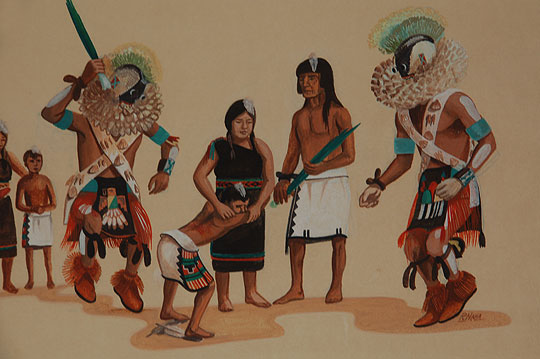
In comparison, in Hopi society, children are given a name at their Naming Ceremony. Years later, they are initiated into society to learn their clan's knowledge. If adults are talking about Hopi traditions, rituals, or knowledge and a child who isn't initiated yet walks into the room, the adults stop talking because that child has yet to be given the right to that knowledge.

Hopi Initiation Ceremony

Around the age of 9, 10, or 11, Hopi children are initiated along with the other children of that age group who are ready for both the knowledge and responsibilities that being a part of their clan entails. 

They way these parts can be compared, coming from two completely different societies struck me. I began to wonder, how many writers travel or research another culture's way of life and then present their take on that society as fiction. If you had asked me prior to learning about the Hopi, I would have said that The Giver's Ceremonies sounded completely original to me. But now that I know similarities exist, it makes me wonder what others are out their in other cultures and in other stories. 

Wanting to know more, I did what any writer would do. I went to the library and checked out four books on Hopi society and artwork. As the semester goes on, I'm going to try to learn more than just the typical stereotypes we, as Americans, know about other cultures. I'm going to do research about ways of life in different countries around the world and see, does this remind me of a book I've read? And I'll take parts of societies that interest me to create a new, fictional society.

Wednesday, September 11, 2013

Julius


I'm trying to take my blog in a direction that's more my creative writing than story analysis. And my Intro to PW class today ties right in! We did a fun writing exercise where one person chooses a character for someone else to write about. We had some really creative stories like a young catholic girl who was considering being a lesbian, a were-pigeon who was transitioning, a six year old with a super power, and a zombie killing its thirty-fifth victim.

My story prompt was a scientist who's discovered a new element:

The gray-silver liquid solidified into my new throne as the king of science. This new element would skyrocket my career. The perfect combination of water and titanium, the element could be destabilized with significant vibrations and reshaped into a new object.


I sat back in my chair in my dimly lit lab feeling the cool element chill my aching back muscles through my nearly threadbare brown t-shirt. After eighteen years of school and another seven working on my project, I had finally discovered success. The weight of my accomplishment settled on my shoulders like an expensive mink coat, comforting.

Who would I tell first? I scrambled up and across my lab, tripping over ragged textbooks, discarded notes, and misplaced beakers. I stopped cold in front of my interactive hologram connector.

Because of my unwavering attentions, many of the important people in my life had wandered off over time. My brother had moved to Portland, taking his wife and three children with him. But I could still tell him... He might even come back now that I'd succeeded. I could finally repay him for my student loans, the material costs, and my mortgage. This new element would make me a millionaire. And to prove to my brother how much I appreciate his contributions and to resurface from my guilt, I would name my element after him, Julius.

Friday, September 6, 2013

A Strong Moral Separation

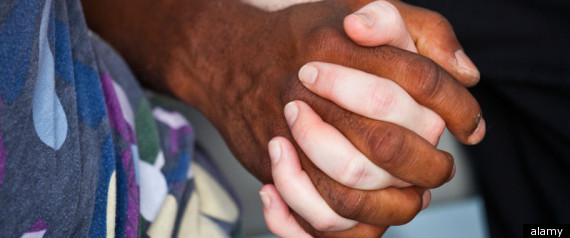
For this week's post, I read Tobias Wolff's story "Say Yes." This is a story about a disagreement about interracial marriage, and it stirred up some powerful feelings in me to the point that I'll be writing about them more in depth for another project for my class, which I may post on here later.

In the short story, an older married couple is washing dishes when the wife asks the husband what he thinks about interracial marriage. He says that "all things considered" he thinks it is a bad idea. His wife persists in asking him why he thinks so even as he tries to change the subject. 
 He denies being racist, saying "I went to school with blacks and I've worked with blacks and lived on the same street with blacks, and we've always gotten along just fine. I don't need you coming along now and implying I'm racist." 
 As his wife begins to get upset, he tries to explain what he’s thinking.
 “They don’t come from the same culture as we do,” he says – like that makes it okay.
 This heats up the conversation. Then the wife accidentally cuts her thumb on a knife. The husband, who already sees himself as incredibly considerate for helping with the dishes, runs up stairs to get a Band-Aid in order to rescue her.  
 While he holds her thumb to bandage it, she looks accusingly at him.
 “So,” she says, “you wouldn’t have married me if I’d been black.” She says this as a statement. Not a question. She already knows she’s right.
 He attempts to tell her she’s being ridiculous.
 “But say that I’m black, but still me, and we fall in love. Will you marry me?” his wife asks.
 He thinks about it, and he responds, “Jesus, Ann. All right – no.”
 She stalks out of the room. To atone for his sins, he mops the floors and takes out the garbage.
 After some time to cool down, he says he’ll make it up to her. “I’ll marry you,” he whispers.
 “We’ll see,” she says. “Go on to bed.”
 Now the story takes a mysterious turn. The tone of the final paragraph is eerie.
“Then he heard a movement across the room. He sat up but couldn’t see a thing. The room was silent. His heart pounded as it had on their first night together, as it still did when he woke at a noise in the darkness and waited to hear it again – the sound of someone moving through the house, a stranger.”
I think the ending of the story implies that their strong moral separation has erased all of their years together and made them strangers. A feeling I can identify with all too well.

Friday, August 30, 2013

Living The Life

For my Intro to Professional Writing class this semester, I'll be frequenting this blog once a week! So get used to seeing me around more often.
 The next Tobias Wolff story is called "Next Door." It's only five pages, and he does a phenomenal job of enticing you in during such a short amount of time.
The story opens with a couple, who've been awakened in the middle of the night because their neighbors are fighting. The neighboring couple is screaming at each other, and all the lights in the house are on. The baby cries, and the dog barks, and the man strikes his wife. We never learn any names. 
The couple witnessing all of this is used to it. It happens often. 
The wife asks what’s on TV, and the husband reminisces about how he brought the TV into their bedroom in the first place because his wife used to be sick.
“It sits between our beds on a little table I built,” he explains.
With the imagery of separate beds and a past illness, this appears to be a couple of seniors.
The husband refers to sexuality with geographical terms. When his wife comes to visit him in his bed, “old Florida begins to stiffen up on me,” he thinks. “I put my arms around my wife. I move my up onto the Rockies, then on down across the plains, heading south.”
“Hey,” the wife says. “No geography. Not tonight.” Clearly, she knows what his narrative sounds like in his head.
They watch a movie called “El Dorado” about explorers looking for the city of gold. 
The husband returns to thinking about the couple next door. 
“I think about the life they have, and how it goes on and on, until it seems like the life they were meant to live. Everybody always says how great it is that human beings are so adaptable, but I don’t know.”
I think that thought about a life seeming like the life we were meant to have is the thesis of the story.
It’s an odd little moment of the lives of two couples, but the way it’s told is so enchanting. So much is left out that your imagination wonders. Wonders if you’re living a life or the life.

Tuesday, August 13, 2013

The Quiet Race

I was driving home from a friend's tonight, and I started thinking...

What if we lived in a world where communication was limited to only three basic messages? There were no stories, movies, songs, books, conversations, sentences, or even words. Only three feelings.

1. On - This symbolizes everyday life. No one pays any mind to this message because this is what we have come to expect from each other. Compared to modern day conversations, this would be the obligatory "How are you?" "Oh, I'm good" exchange. The initiator doesn't care about the answer and the responder doesn't really tell the truth.

2. High beams - This would fill in for anything out of the ordinary: excitement, anger, grief, joy, happiness, fear, surprise, anticipation, shame, love, envy, or confusion. But the catch is, no one knows which emotion. He or she knows only that it means something more than apathy.

3. And finally, off. - This is the dangerous one because it means this person has nothing to say, feels nothing. The message can change back to on, if done quickly. But if not, with no purpose, the message stays off. Death.

**In case you haven't figured it out yet, this is a metaphor for driving a car a night and the brightness of headlights.**

It all began because a woman took a drive one night to clear her head. She realized that without the constant jabbering of the world's media - TVs, radios, advertisements - and people - her husband, her kids, her mother, her best friend: she could finally think. With all of that deep thinking, came a deep understanding of herself and what she truly wanted. She discovered that while those noisy people and things sometimes brought her pleasure, a greater portion of the time they provided only distress.

Without them, she could think freely. She could pray. She could imagine. She could dream. She could do many other things that society has been suppressing for years. And she liked it.

But a world without people or emotions would be a sad and lonely one. So she resolved not to be alone, but, instead, to have quiet.

Upon returning home, she removed a headlight from her car and affixed it to a strap around her shoulders like a shoulder-bag. She wrote a note to her family explaining her new endeavor and asking them to try it, too. She explained the lights with the three categories, and began her new life - dedicated to the peacefulness of the human mind.

Of course, her family thought she was crazy. Who wouldn't? I do. You know, you do too. But there is also a small part of me that would love for society's noise to just leave me alone. So that I could pray, imagine, and dream.

And when her family tried the new calm system of communication, they found that they, too, liked it. One woman's plea for quiet in a world brimming with noise, became the cry of an entire generation. And person by person, family by family, city by city, and country by country, everyone became quiet.

Until the only sounds on the whole earth, were the noises of the animals and the hum of electricity coursing through the power lines.

In the beginning, everyone was overjoyed, and they used their high beams so much that everyone's eyesight faded just a bit. But as the silence began to take it's toll, most autopiloted to simply "on."

As the quiet race had children, their children became quiet and their children after that. Until as a collective race, we all forgot how to speak. And there were only quiet lights throughout the whole world.

To be continued...