Friday, September 27, 2013

Five and Dime

I got a new Joshua Radin CD today called Underwater. Joshua is my all-time favorite singer, and in tribute to him, I had an idea to use his song Five and Dime as a writing prompt for my blog post today.

The part of the song I selected is:
“Annie waits in line at the Five and Dime,
The men stare; she says she doesn’t mind,
There’s seven mouths to feed,
And she wears it on her sleeve,
And she remembers the day she said she was gonna leave.
She says take me back,
To a time I knew before
Before I opened my eyes and knew I wanted more.”


Annie shuffled her feet in impatience, staring down at her tattered black flip flops. The line refused to move forward, and she felt the eyes of the men who ran the oil rig on her back, her golden hair, her hips. The men stared at her whenever they saw her in town, but today, stuck in line at the Five and Dime, she was captive to their attention. She tightly gripped her basket with a loaf of bread, a package of Kraft Singles American cheese, and a half gallon of milk. With seven hungry children and a husband who demanded a home-cooked meal, an eight dollar supper was almost expensive for her.
Kurt, her husband, worked on the oil rig with the guys and didn’t defend her when the men increased their advances to include degrading comments.  He said he spent forty hours a week with those men and couldn’t have them hating him. If she had to endure a few comments, it was for the good of his job, he said. Deep down inside, Annie wished he would stand up to the men one day.
Finally, the hold up at the checkout counter was resolved, and the line began to move. Annie smiled at Glenda, the kind old cashier.
“How you doing tonight, honey?” Glenda asked as she rang up the purchases.
“Oh, I’m just fine, thank you. And yourself?”
“As good as can be expected for an old lady like me.” A worried look crossed her face as she said, “Those oil rig guys been looking at you like you was a piece of candy for them to suck on.”
“They don’t bother me. They’re friends of Kurt’s from work,” Annie assured her.
“Alright, honey. So long as you feel safe in this here store. Have a good evening.”
As Annie walked the five blocks home down Main Street, she remembered back to her junior year of high school, when she’d found out she was pregnant with Reggie. She’d told Kurt, and he had been so supportive and protective of her. He made sure she and the baby were well nourished even if he had to skip a meal. Where were those caring attentions now? All he did now was work and drink. And he used the supper money to pay for his liquor.
She’d threatened to leave him, threatened to take the kids and move to New York City. Surely, the city of dreams would give some of its promise to her and her children. But Kurt had gotten so angry. His face had become taught with rage and his eyes darted in different directions as if he were trying to out think Annie before she could dart out on him.

She’d agreed to stay for the sake of the children. After all, they needed their Daddy. Just like she’d needed her Daddy before he left her Momma. Before she knew that married couples weren’t always happy. Before she knew that having children didn’t make you love each other more. 

Thursday, September 19, 2013

Native American Hopi Society Seen in Utopian Fiction

Today, in my Native American Studies class, my teacher taught us about Native American governance, specifically for the Hopi tribe. As I was sitting there, listening to him describe a way of life that was completely foreign to me, I realized, one of the books I'm reading right now, called Son by Lois Lowry, has an incredibly similar social structure. Even though Lowry's book is set in the future and Hopi's have been living this way for hundreds of years, I could see the comparison. 

To set up the scene:
In The Giver series, in which Son is the final book, the world is presented as a Utopian society. Each year, exactly 50 children are born from Vessels, or Birth Mothers. These women live together in a setup similar to a dormitory. 

Once the children are a year old, they go to their first Ceremony to be named and assigned to a family. Each group of parents is assigned one male child and one female child throughout their years as parents.

The children go through phases of life together, all getting jackets with pockets at age seven so they can be responsible for their own possessions, bikes at age nine, the exact same haircuts at age ten, and finally being assigned their career paths at age 12. Once a child has been assigned, he or she stops learning a diverse set of subjects in school and begins, instead, to learn only the knowledge needed for his or her career, knowledge which no one outside of that career can know. 

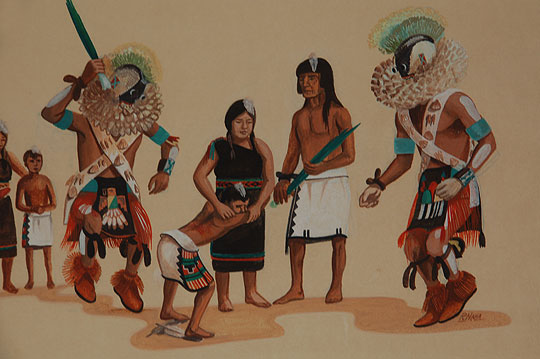
In comparison, in Hopi society, children are given a name at their Naming Ceremony. Years later, they are initiated into society to learn their clan's knowledge. If adults are talking about Hopi traditions, rituals, or knowledge and a child who isn't initiated yet walks into the room, the adults stop talking because that child has yet to be given the right to that knowledge.

Hopi Initiation Ceremony

Around the age of 9, 10, or 11, Hopi children are initiated along with the other children of that age group who are ready for both the knowledge and responsibilities that being a part of their clan entails. 

They way these parts can be compared, coming from two completely different societies struck me. I began to wonder, how many writers travel or research another culture's way of life and then present their take on that society as fiction. If you had asked me prior to learning about the Hopi, I would have said that The Giver's Ceremonies sounded completely original to me. But now that I know similarities exist, it makes me wonder what others are out their in other cultures and in other stories. 

Wanting to know more, I did what any writer would do. I went to the library and checked out four books on Hopi society and artwork. As the semester goes on, I'm going to try to learn more than just the typical stereotypes we, as Americans, know about other cultures. I'm going to do research about ways of life in different countries around the world and see, does this remind me of a book I've read? And I'll take parts of societies that interest me to create a new, fictional society.

Wednesday, September 11, 2013

Julius


I'm trying to take my blog in a direction that's more my creative writing than story analysis. And my Intro to PW class today ties right in! We did a fun writing exercise where one person chooses a character for someone else to write about. We had some really creative stories like a young catholic girl who was considering being a lesbian, a were-pigeon who was transitioning, a six year old with a super power, and a zombie killing its thirty-fifth victim.

My story prompt was a scientist who's discovered a new element:

The gray-silver liquid solidified into my new throne as the king of science. This new element would skyrocket my career. The perfect combination of water and titanium, the element could be destabilized with significant vibrations and reshaped into a new object.


I sat back in my chair in my dimly lit lab feeling the cool element chill my aching back muscles through my nearly threadbare brown t-shirt. After eighteen years of school and another seven working on my project, I had finally discovered success. The weight of my accomplishment settled on my shoulders like an expensive mink coat, comforting.

Who would I tell first? I scrambled up and across my lab, tripping over ragged textbooks, discarded notes, and misplaced beakers. I stopped cold in front of my interactive hologram connector.

Because of my unwavering attentions, many of the important people in my life had wandered off over time. My brother had moved to Portland, taking his wife and three children with him. But I could still tell him... He might even come back now that I'd succeeded. I could finally repay him for my student loans, the material costs, and my mortgage. This new element would make me a millionaire. And to prove to my brother how much I appreciate his contributions and to resurface from my guilt, I would name my element after him, Julius.

Friday, September 6, 2013

A Strong Moral Separation

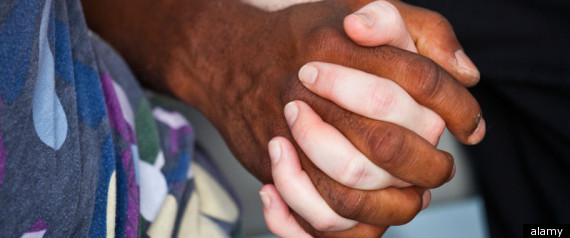
For this week's post, I read Tobias Wolff's story "Say Yes." This is a story about a disagreement about interracial marriage, and it stirred up some powerful feelings in me to the point that I'll be writing about them more in depth for another project for my class, which I may post on here later.

In the short story, an older married couple is washing dishes when the wife asks the husband what he thinks about interracial marriage. He says that "all things considered" he thinks it is a bad idea. His wife persists in asking him why he thinks so even as he tries to change the subject. 
 He denies being racist, saying "I went to school with blacks and I've worked with blacks and lived on the same street with blacks, and we've always gotten along just fine. I don't need you coming along now and implying I'm racist." 
 As his wife begins to get upset, he tries to explain what he’s thinking.
 “They don’t come from the same culture as we do,” he says – like that makes it okay.
 This heats up the conversation. Then the wife accidentally cuts her thumb on a knife. The husband, who already sees himself as incredibly considerate for helping with the dishes, runs up stairs to get a Band-Aid in order to rescue her.  
 While he holds her thumb to bandage it, she looks accusingly at him.
 “So,” she says, “you wouldn’t have married me if I’d been black.” She says this as a statement. Not a question. She already knows she’s right.
 He attempts to tell her she’s being ridiculous.
 “But say that I’m black, but still me, and we fall in love. Will you marry me?” his wife asks.
 He thinks about it, and he responds, “Jesus, Ann. All right – no.”
 She stalks out of the room. To atone for his sins, he mops the floors and takes out the garbage.
 After some time to cool down, he says he’ll make it up to her. “I’ll marry you,” he whispers.
 “We’ll see,” she says. “Go on to bed.”
 Now the story takes a mysterious turn. The tone of the final paragraph is eerie.
“Then he heard a movement across the room. He sat up but couldn’t see a thing. The room was silent. His heart pounded as it had on their first night together, as it still did when he woke at a noise in the darkness and waited to hear it again – the sound of someone moving through the house, a stranger.”
I think the ending of the story implies that their strong moral separation has erased all of their years together and made them strangers. A feeling I can identify with all too well.